Is IPTV Legal in the USA? Everything You Need to Know
Understand the legal landscape of Internet Protocol Television in the United States. Discover when IPTV is legal, how copyright laws apply, and how to identify legitimate IPTV providers.

With millions of American households moving away from traditional cable subscriptions, Internet Protocol Television (IPTV) has become one of the most popular ways to access live television, sports, and on-demand movies. However, as cord-cutting grows across the country, one critical question continues to surface among consumers: is IPTV legal in USA?
The direct answer is clear: IPTV technology itself is completely legal in the United States. IPTV is simply a transmission method that delivers television broadcasts and video content across high-speed internet protocol networks rather than through legacy coaxial cable lines or satellite dishes.
However, the legality of a specific IPTV service in the USA depends entirely on whether the provider holds the necessary licenses, retransmission consent, and broadcast rights from the copyright owners of the programming it distributes. While many legitimate platforms operate in full compliance with federal law, unauthorized operations distribute copyrighted content without proper agreements.
In this comprehensive guide, we will break down the legal status of IPTV in the United States, examine relevant U.S. copyright statutes, provide practical checklists to identify legitimate services, and answer the most common questions surrounding IPTV legality.
Is IPTV Legal in the USA?
To understand IPTV legality in USA, it is essential to distinguish between the delivery technology, the applications used to play streams, and the service providers supplying the content.
In short, is IPTV illegal in USA? No. IPTV is a recognized technological format used across the telecommunications industry. The distinction between legal and illegal IPTV comes down strictly to copyright authorization and content licensing.
What Is IPTV?
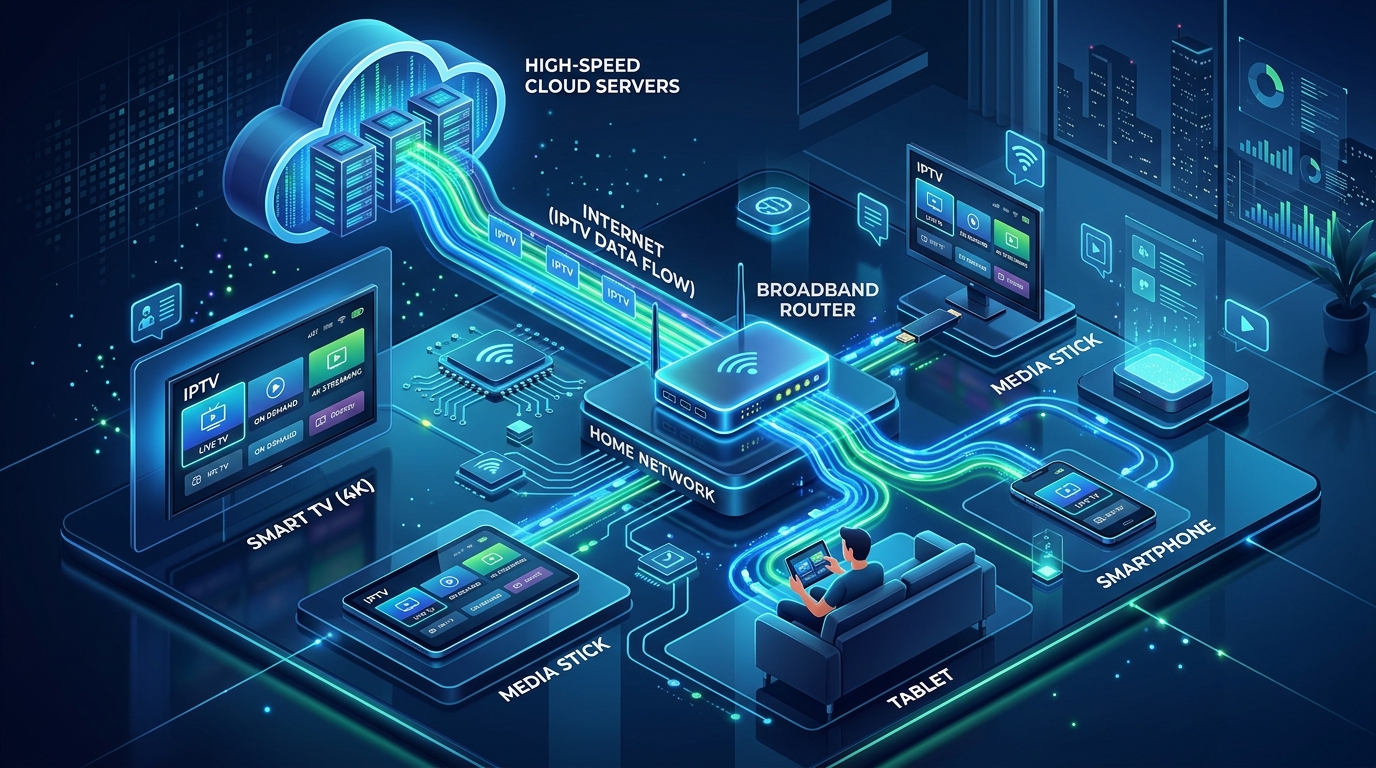
IPTV stands for Internet Protocol Television. Rather than receiving television signals through radio frequency waves (terrestrial antennas), satellite transponders, or analog/digital cable lines, IPTV transmits digital media packets across packet-switched broadband networks using the Internet Protocol suite (TCP/IP).
How Does IPTV Work?
When you tune into a channel on a traditional cable TV network, all channels are transmitted simultaneously down the physical cable line, and your set-top box decodes only the selected frequency. In contrast, IPTV utilizes an on-demand unicast or multicast delivery model:
IPTV vs Traditional Cable and Satellite TV
Comparing IPTV to traditional television broadcast models highlights why millions of Americans have embraced internet-based streaming:
| Feature | IPTV (Internet Protocol TV) | Traditional Cable TV | Satellite TV |
|---|---|---|---|
| Transmission Medium | High-speed Broadband (Fiber, Cable, 5G) | Physical Coaxial / Fiber Lines | Geosynchronous Satellite Dishes |
| Hardware Requirements | Smart TV, Firestick, Android TV, PC, Mobile | Proprietary Set-Top Box | Satellite Dish + Receiver |
| Multi-Device Flexibility | Stream on TVs, Tablets, Phones, Laptops | Limited to wired cable outlets | Limited to wired satellite receivers |
| Installation Speed | Instant digital activation | Professional technician visit | Professional roof/wall mounting |
| Weather Reliability | Stable (independent of weather conditions) | Stable (subject to physical line cuts) | Vulnerable to heavy rain & snow fade |
| On-Demand Integration | Seamless Live TV + VOD libraries | Often requires separate add-ons | Limited on-demand storage |
When Is IPTV Legal in the USA?
An IPTV service is fully legal in the United States when it complies with the requirements established by the **** and federal communications regulations.
Licensed Content
In the United States, television programming, live sports events, and films are protected under Title 17 of the United States Code (****). To legally broadcast copyrighted material, a service provider must secure:
Legitimate IPTV Providers
Legitimate IPTV providers operate as registered commercial entities, maintain public business addresses, transparently outline their licensing partnerships, and pay requisite royalties to content creators and distribution syndicates.
IPTV Apps vs IPTV Services
One of the most important legal concepts for consumers to understand is the distinction between IPTV player applications and IPTV content providers:
Using an IPTV application on your device is entirely lawful. The legal status of your streaming experience depends on the source of the content feed you choose to connect to the player.
When Can IPTV Be Illegal?
An IPTV operation crosses into illegality when it distributes copyrighted audiovisual content without obtaining the required authorization or paying mandatory broadcast licensing fees.
Common characteristics of unauthorized IPTV distribution include:
Federal regulatory agencies and copyright protection groups actively pursue operations that facilitate unauthorized redistribution of commercial broadcasts.
Is Watching Illegal IPTV Illegal in the USA?
When examining IPTV streaming laws, consumers frequently ask whether simply watching or receiving an unauthorized stream violates federal law.
In the United States, copyright and streaming law distinguishes between commercial distributors/operators and individual consumers:
Consumers are strongly encouraged to choose legitimate, transparent services to ensure consistent service reliability, high stream quality, and complete digital security.
How to Tell if an IPTV Service Is Legitimate
To help cord-cutters evaluate providers, here is a practical verification checklist:
Check the Provider's Business Information
Legitimate providers display verifiable business details, such as corporate registration, clear website ownership, and customer support channels. Be cautious with anonymous websites that hide all operational identity.
Look for Clear Terms and Contact Information
Authorized platforms offer comprehensive terms of service, accessible privacy policies, transparent refund and cancellation terms, and dedicated 24/7 customer support.
Be Careful With Unrealistic Channel Claims
If a provider claims to offer every premium channel, international sports package, and theatrical movie release in the world for an impossibly low rate, investigate whether they possess verifiable distribution rights.
Check How Premium Content Is Licensed
Legitimate operations clearly explain their service parameters and operate through recognized digital transmission standards.
Avoid Services Promising Everything for an Extremely Low Price
Commercial broadcast licensing fees for live sports and premium networks are substantial. Extremely cheap services promising thousands of premium channels often lack formal licensing agreements.
Look for Transparent Billing and Cancellation Policies
Legitimate streaming services offer clear recurring subscription terms, straightforward checkout processes, and documented cancellation procedures.
Legal IPTV vs Illegal IPTV
The following comparison table outlines the practical differences between legitimate IPTV services and potentially unauthorized streaming operations:
| Evaluation Criteria | Legitimate IPTV Services | Potentially Unauthorized Services |
|---|---|---|
| Content Rights | Licensed via retransmission consent & network agreements | Rights often absent, unclear, or unverified |
| Corporate Transparency | Registered business with identifiable ownership | Anonymous web presence with hidden ownership |
| Pricing Model | Sustainable commercial pricing matching licensing costs | Unrealistically low pricing for massive content bundles |
| Terms & Policies | Published Terms of Service, Privacy Policy & Refund Rules | Missing, vague, or copied policy documentation |
| Payment Security | Recognized payment processors and secure merchant gateways | Often restricted to irreversible cryptocurrency or gift cards |
| Customer Support | Dedicated email, ticketing, or responsive support teams | Anonymous or unresponsive support channels |
| Service Longevity | Stable infrastructure with continuous operation | High risk of sudden domain seizures or server blackouts |
Note: This comparison table serves as a general consumer informational guide and does not constitute a formal legal assessment of any specific entity.
IPTV and Copyright Law in the USA
The regulatory landscape governing digital video distribution in the United States involves several key federal frameworks and agencies:
Is IPTV Legal for Firestick, Smart TVs and Other Devices?
A common area of confusion is whether using IPTV on specific streaming hardware—such as an Amazon Fire TV Stick or Smart TV—affects its legal status.
The hardware device you use has no bearing on the legality of IPTV. Modern streaming devices are neutral hardware platforms:
For step-by-step instructions on configuring your favorite hardware with compatible media players, explore our verified setup guides and tutorials.
Comparing IPTV Options in the United States
If you are exploring high-performance IPTV services in the USA, it is important to choose a platform that combines high-definition stability, comprehensive channel lineups, and responsive technical support.
At IPTV USA Pro, our platform delivers:
Explore our flexible IPTV plans and pricing, review the full channels list, or check our supported devices to get started.
Frequently Asked Questions About IPTV Legality
Is IPTV legal in the USA?
Yes, IPTV technology is completely legal in the USA. The legal status of any particular IPTV service depends on whether the provider has secured the proper broadcast licenses and distribution rights for the content it transmits.
Is IPTV illegal in America?
No, IPTV is not illegal in America. The term describes internet-based television transmission. Only services that distribute copyrighted channels, movies, or live sports without authorization violate U.S. copyright laws.
Is IPTV legal on Firestick?
Yes, using IPTV on an Amazon Firestick is completely legal. The Firestick is a legitimate media hardware device, and media player apps like TiviMate or IPTV Smarters are legal software tools. Legality is determined solely by the content source connected to the player.
Is watching IPTV legal in the USA?
Watching IPTV from authorized and licensed providers is 100% legal in the USA. Federal enforcement under laws like the Protecting Lawful Streaming Act focuses on commercial distributors and piracy operators rather than individual viewers, though unauthorized streams carry cybersecurity and service reliability risks.
Are all IPTV services legal?
No. While legitimate providers hold valid commercial licenses from broadcast networks, many unauthorized services operate without licensing agreements or intellectual property permissions.
How can I tell if an IPTV provider is legitimate?
Legitimate IPTV providers maintain transparent corporate entities, published terms of service, responsive customer support, standard payment methods, and realistic channel offerings backed by verifiable licensing agreements.
Is IPTV legal for Smart TVs?
Yes. IPTV is fully legal on Samsung, LG, Sony, Android TV, and other Smart TVs. Media player applications downloaded from official app stores are legitimate software players.
Can IPTV providers be shut down for copyright infringement?
Yes. Federal law enforcement agencies including the U.S. Department of Justice (DOJ), Homeland Security Investigations (HSI), and copyright protection coalitions regularly seize domains and prosecute commercial illicit streaming operations under federal copyright statutes.
Looking for reliable, buffer-free streaming across all your home devices? [Learn more about our IPTV service](/) or [contact our 24/7 support team](/contact) today.
Stream Over 24,000+ Channels with Zero Buffering
Enjoy high-speed 4K & FHD streaming powered by Anti Freeze 9.3 servers. Compatible with Firestick, Smart TVs, Android, iOS, and PC with instant 5-minute activation.